Embleem historisch luchtvaartonderzoek

Jurgen Swinnen

Historisch en luchtvaartonderzoek

BELGIAN AVIATION · HISTORICAL HERITAGE

Red Devils

From the Hawker Hunter and Fouga Magister to the SF-260 Marchetti: the Belgian aerobatic display team, its pilots, technicians and traditions.

A distinctive Belgian aerobatic team

More than six decades of aviation history

The Belgian Air Force Red Devils are the aerobatic team of the Belgian Air Component. Founded in 1957, the team became particularly well known during the 1960s and 1970s with its red jet trainers. After a long break, the name returned in 2011, this time with the SIAI-Marchetti SF.260.

The team's history spans several periods, each with different aircraft, pilots and support personnel. Flying displays with the SF.260 were suspended after the 2024 season. Current status: static team

Why do the Red Devils have their own page?

A tribute to a distinctive Belgian aviation tradition

This website documents aviation history, focusing on events, aircraft and the people involved. The Belgian Air Force Red Devils deserve a place of their own in that history. Since 1957, they have formed a recognisable chapter in Belgian military aviation, from the Hawker Hunters and Fouga Magisters to the SIAI-Marchetti SF.260.

The Red Devils are more than a formation performing spectacular aerobatic manoeuvres. Behind every display are pilots, instructors, technicians and support personnel working together with skill, safety and team spirit. The traditions, distinctive aircraft liveries and official patches are also part of this heritage.

With the Red Devils currently operating as a static team and no flying displays taking place, this is an appropriate moment to preserve their story and make it accessible. This page is a thematic historical overview, not a numbered crash or research dossier. It may be expanded in the future as additional photographs, testimonies or documents become available.

A personal museum story

When I previously proposed a historical Red Devils exhibition at the aviation museum in Brussels, members of the team responded enthusiastically. According to my recollection, Lieutenant Colonel pilot Jean “Jeanke” Van Hecke was even willing to explore making an SF-260 Marchetti available. Higher Defence leadership ultimately considered the idea inopportune, and the exhibition did not take place.

This account is my personal recollection, not an official written record of the decision. That is one reason I want to preserve the team's history, aircraft and people online.

The history of the Red Devils

From 1957 to the present day

1957–1963

The early years: Hawker Hunters

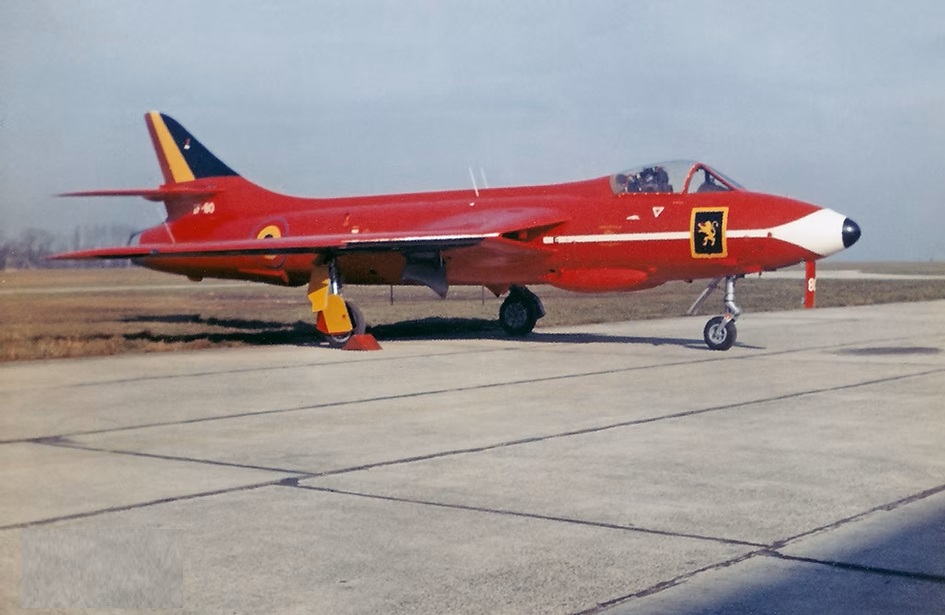
In 1957, Major Robert Bladt of the 7th Fighter Wing at Chièvres established a new aerobatic team. Its first public display took place in Valenciennes, France, on 12 June 1957. The pilots flew camouflaged Hawker Hunters.

By 1959, the formation consisted of nine aircraft. In 1960, financial constraints led to a reduction to four display aircraft and two reserves. The Hunters received a striking all-red paint scheme and the name Red Devils. The final Hunter display took place on 23 June 1963, the year the 7th Wing was disbanded.

Hawker Hunter in de rode Red Devils-beschildering
Historical image of a red Hawker Hunter.
1965–1977

The Magister years

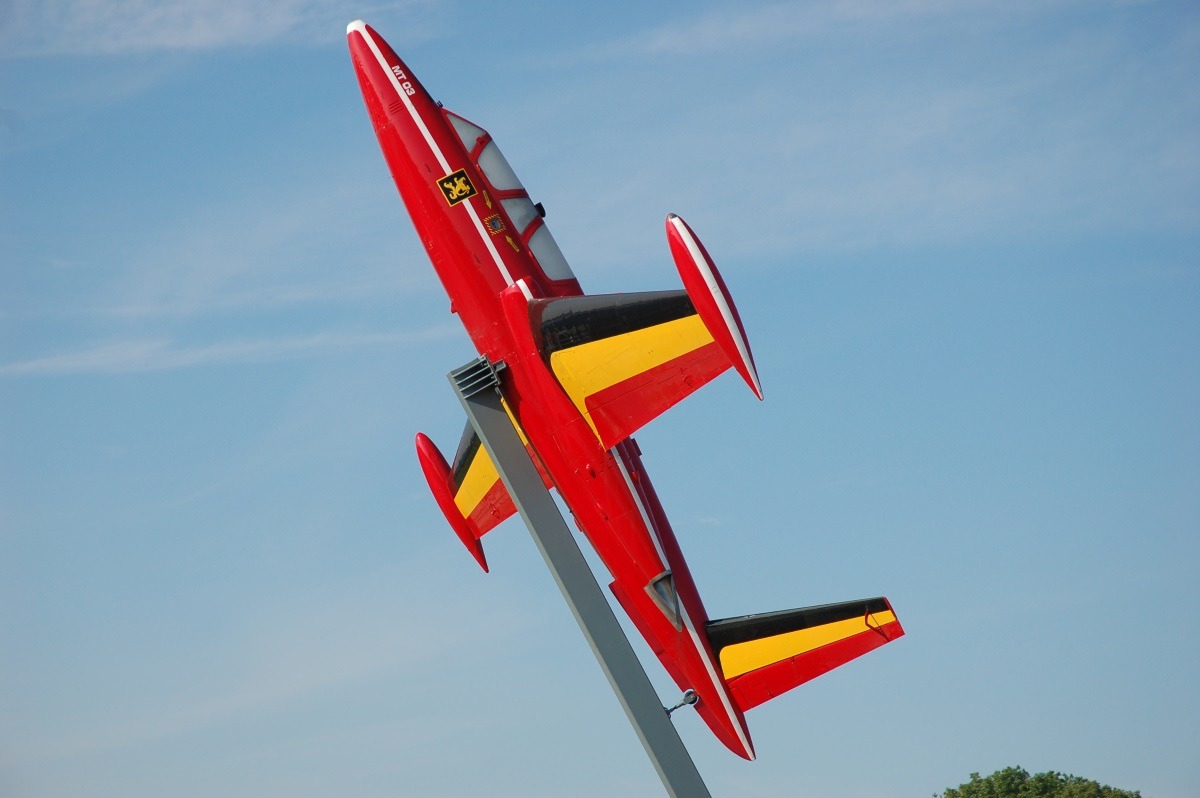
In 1965, the Red Devils returned with seven Fouga CM.170R Magister jet trainers. The aircraft were painted red, and red, yellow and black smoke trails were used during displays. The first Magister display took place at Brustem on 27 June 1965.

Fuel costs and budgetary constraints led to changes in the number of aircraft over the years. The team flew two aircraft in 1972, three in 1973 and six again in 1974. In 1977, the Belgian Air Force disbanded the team. A break of more than thirty years followed.

Red Fouga Magister mounted on a display
Red Fouga Magister preserved as aviation heritage.
2008–2011

From Hardship Red to the Red Devils

In 2008–2009, instructors from the 1st Wing at Beauvechain formed Hardship Red, a four-aircraft formation using SIAI-Marchetti SF.260M trainers. It began as a display formation using training aircraft but developed into a full aerobatic team.

In 2011, on the occasion of the 65th anniversary of the Belgian Air Force, the team once again adopted the name Red Devils. The four SF.260s received a red-and-white colour scheme incorporating the Belgian tricolour. The formation resumed displays in Belgium and abroad.

2011–2024

The Marchetti era

The four SF.260Ms were flown by experienced instructors from the basic flying training unit at Beauvechain. The Red Devils appeared at airshows in Belgium and abroad, combining formation flying with synchronised aerobatic manoeuvres. The team relied not only on its pilots but also on technicians, a coach and public relations personnel.

The final flying display took place at the Sanicole International Airshow in Hechtel-Eksel on 21 and 22 September 2024.

From 2025

A new phase

In April 2025, flying activities were temporarily suspended. The SF.260s were approaching the end of their operational service life, while training new aircrew took priority. A return to flying was linked to the selection of a successor to the trainer.

Current status: the Red Devils are a static team. Public flying displays are not currently taking place, but the team's name and history remain part of Belgian aviation heritage.

The aircraft of the Red Devils

Three aircraft types, three different eras

Hawker Hunter

Period: 1957–1963

The first Red Devils flew the Hunter, initially in camouflage and later in a striking red scheme. In 1959, the formation consisted of nine aircraft.

Fouga CM.170R Magister

Period: 1965–1977

The red Magisters, with their coloured smoke trails, made the team internationally recognisable during its second historical period.

SIAI-Marchetti SF.260M

Period: 2011–2024

Four propeller-driven aircraft formed the re-established team. Their red-and-white colour scheme referred to the Belgian flag.

1959A nine-aircraft Hunter formation.
4 aircraftThe regular formation during the Marchetti era.
2024Final flying display at Sanicole.

The Red Devils in 2018

The pilots and the people behind the formation

In 2018, the display formation consisted of four pilots, with reserve pilots available to step in as required. The team comprised experienced instructors who combined their normal flying duties with the preparation and execution of displays.

Devil 1 — Jean “Jean” Van Hecke

Lieutenant Colonel Jean Van Hecke earned his wings in 1986 and flew, among other aircraft, the F-16. He served as an instructor with the 5th Squadron and led basic flying training from 2014 to 2016. In 2018, he again took command of the Red Devils. According to confirmation from the compiler of this page, he remains active; this does not automatically mean that he currently holds a position within the display team.

Devil 2 — Yves “Meel” Meelbergs

Meelbergs flew the F-16 for twelve years and worked as an instructor and evaluator. He joined the Red Devils reserve in 2017 and flew as left wingman in 2018.

Devil 3 — Albert “Al” Baltus

Baltus flew the F-16, worked as an Alpha Jet instructor and returned to Beauvechain in 2010 as a Marchetti instructor. After an earlier period with the Red Devils, he returned as a reservist and flew as right wingman in 2018.

Devil 4 — Alain “Papy” Collard

Collard previously flew the C-130 with the 15th Wing before becoming a Marchetti instructor. He was part of Hardship Red and one of the pilots involved in the team's revival in 2011. In 2018, he flew the solo position.

Reserve — Christophe “Tcholle” Deroubaix

Deroubaix was part of Hardship Red and returned to flying with the Red Devils from 2017. In 2018, he could fill several positions as a reserve pilot.

Reserve leader — Paul “Paolo” Leys

Leys flew, among other aircraft, the Mirage 5 and T-38 and served as a Marchetti and Alpha Jet instructor. He led the Red Devils from 2013 to 2017 and was the reserve for the team leader in 2018.

Source for this section: Belgian Air Force Association, WINGS No. 14, pp. 6–19, article on the Red Devils and their activities in 2018. Read the article in WINGS No. 14 (PDF).

The coach, technicians and public relations

An aerobatic team is much more than the four pilots seen by the public. In 2018, coach Danny “Ket” Meersman supervised flying practice and evaluations. A team of technicians prepared the aircraft, carried out inspections and minor repairs, monitored fuel and oil levels, and supported the team at airshows. The public relations representative acted as the link between the team and the public.

Training began with a briefing covering objectives, the runway, weather and NOTAMs. This was followed by a mental run-through of the entire display, including manoeuvres, gestures, commands and radio communications. After the flights, video footage was reviewed and a safety debriefing took place beside the aircraft.

The formation practised manoeuvres including close formation flying, the cloverleaf, the Swan formation loop and the Wilkinson crossover. Wind, timing and crossing at a fixed reference point demanded considerable precision and trust between the pilots.

Paul Van Essche

Pilot, instructor and leader of the Red Devils

Paul Van Essche was born in Lede on 18 February 1933. As Belgium did not have sufficient capacity to train all its pilots after the war, he completed part of his flying training in the United States. He was a member of USAF Class 55P and flew aircraft including the Piper Super Cub, T-6 Texan, T-28 Trojan, T-33 Shooting Star and F-84G Thunderjet. He earned his wings on 15 June 1955.

After returning to Belgium, he flew at Beauvechain with, among others, the 350th and 4th Squadrons, operating Meteor F.8s, Hunters and the CF-100. He later became a Fouga Magister instructor at Brustem. From the mid-1960s, he prepared for the re-established Red Devils and was a member of the team in 1965 and 1966. He subsequently led the formation from 1967 to 1969, alongside his regular duties as an instructor.

From 1969 to 1971, he worked with the joint Belgian-Dutch conversion training unit at Twente. He then returned to Brustem as an instructor. In 1973, he again took command of the Red Devils; this period of the team ended in 1974. From late 1973, he also served as safety officer at the Advanced Training Centre at Brustem and carried out post-maintenance test flights with Fouga Magisters and T-33s.
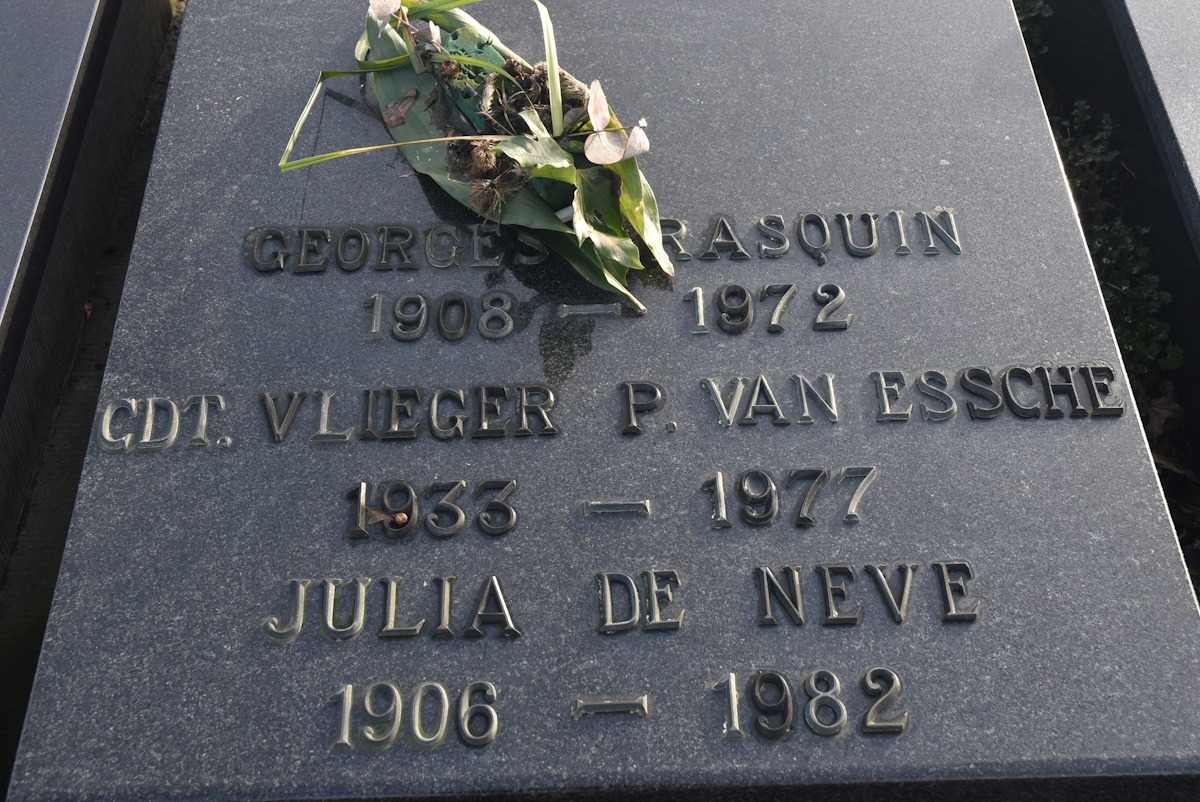
Gravestone of pilot commander Paul Van Essche in Merelbeke
Grave of Paul Van Essche (1933–1977), image from the research collection.

On 18 November 1977, Paul Van Essche and Warrant Officer Paul Slegers were killed in the crash of T-33 FT05. During the return flight from Ramstein, in low cloud and poor visibility, the aircraft struck the slope of the Teufelskopf on the Mückenbornberg, near Kell am See in West Germany. His career connected the classic jet era of the Belgian Air Force with the history of the Red Devils.

This biography is included as historical background and is not a separately numbered crash dossier.

A tradition involving Duvel

The team culture behind the displays

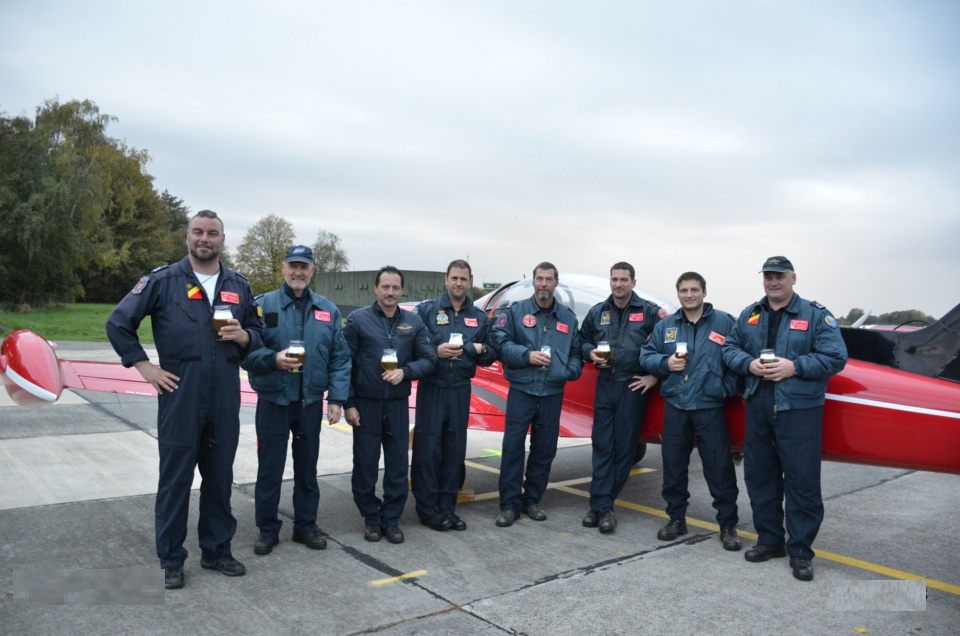
Alongside flying discipline and technical preparation, the Red Devils have a tradition involving Duvel beer. According to the story published by Duvel about the team, a new team member — pilot or technician — traditionally treats the team to a crate of beer.

On that occasion, the original Red Devils badge is placed in a full glass of Duvel. The new member drinks the glass in one go; the badge is not washed but attached to the flying suit. Team members may also share a Duvel after a flight. This informal custom developed into a recognisable part of the team's culture.

The tradition sits alongside the professional work of the pilots, technicians and public relations personnel who represent the Belgian aviation team at events.

Group photograph of Red Devils personnel beside a red aircraft
Team photograph beside a red aircraft; original date and image credit to be documented.

Official Red Devils patches

Examples from a personal collection

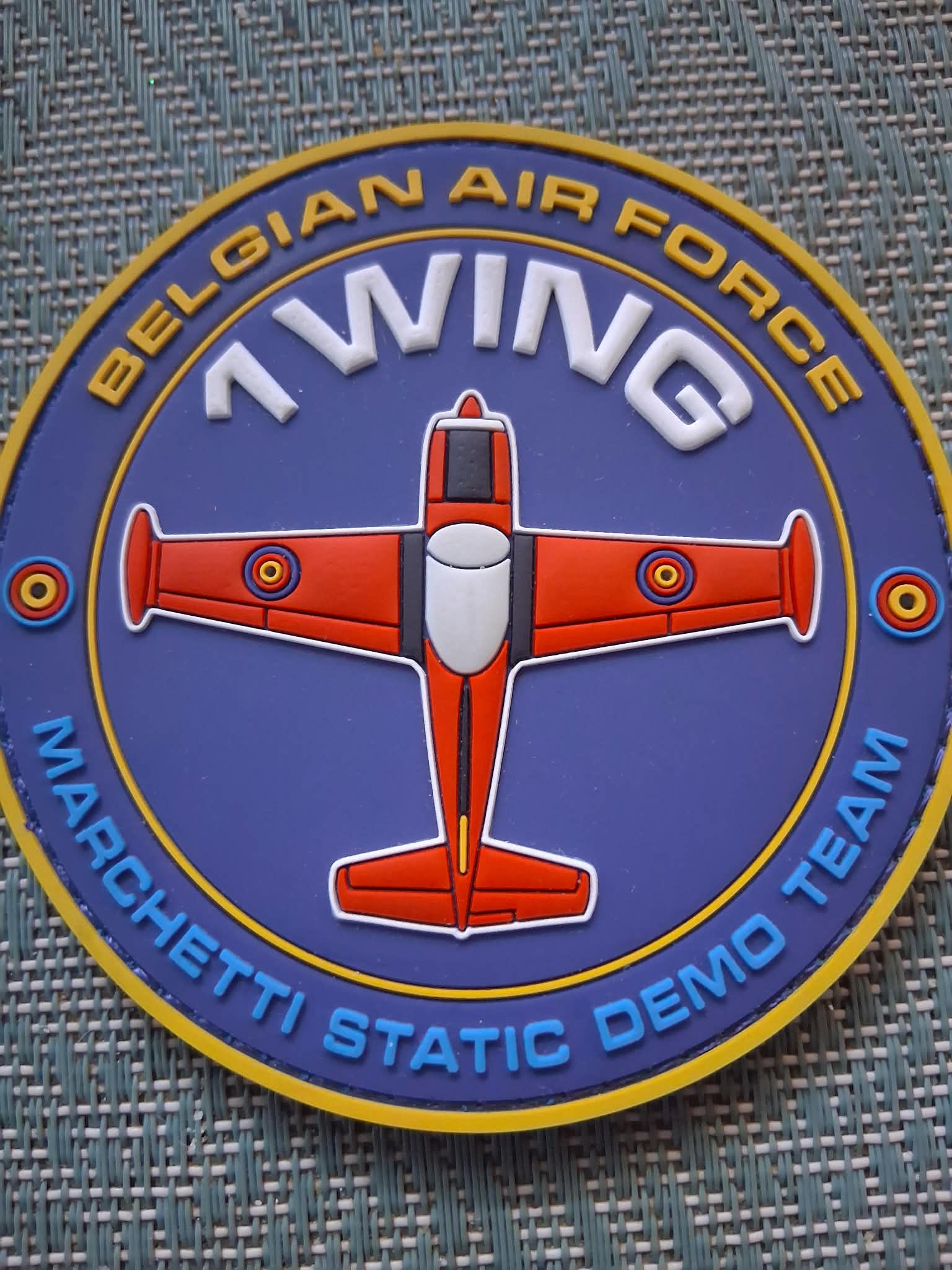
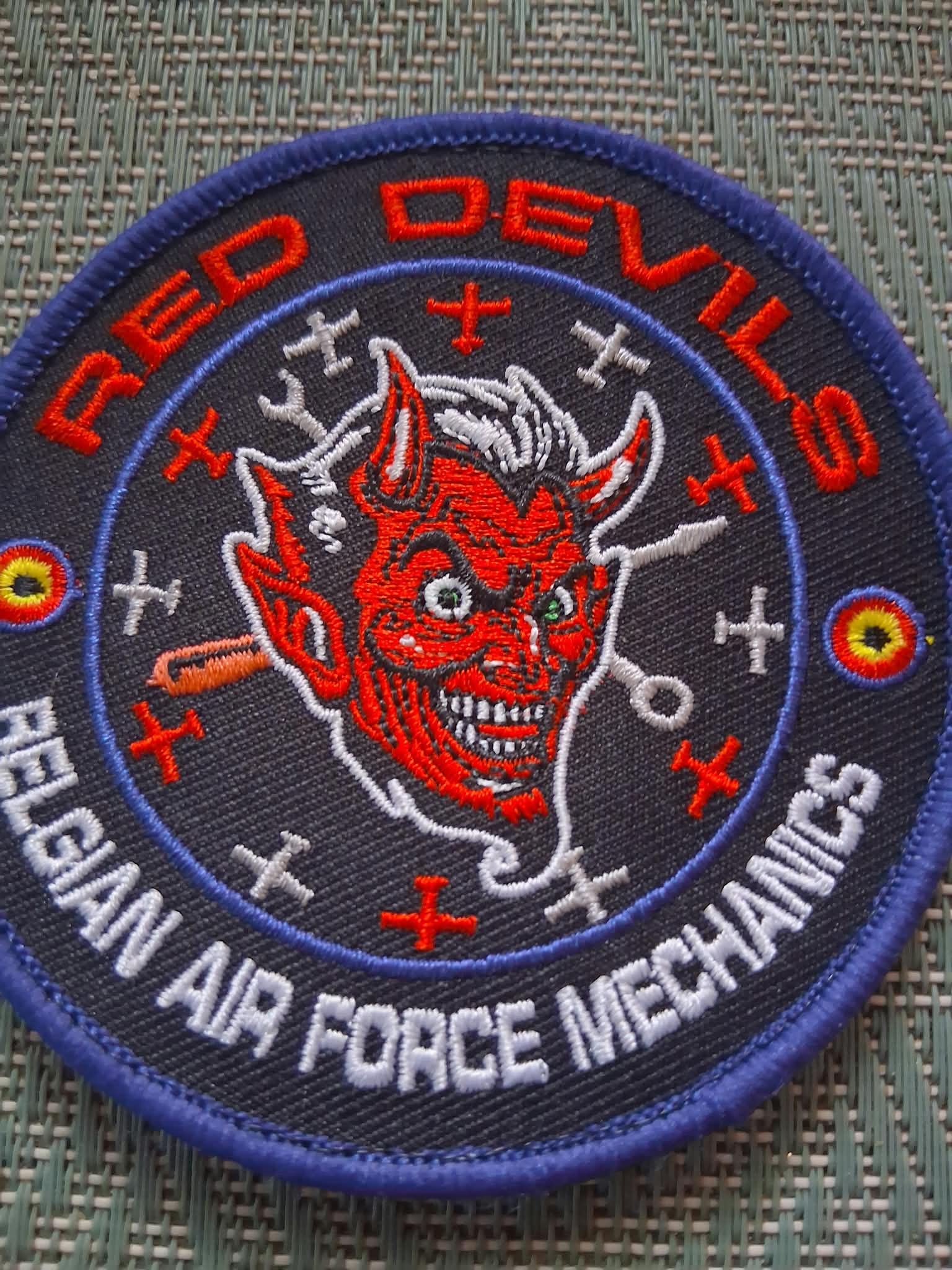
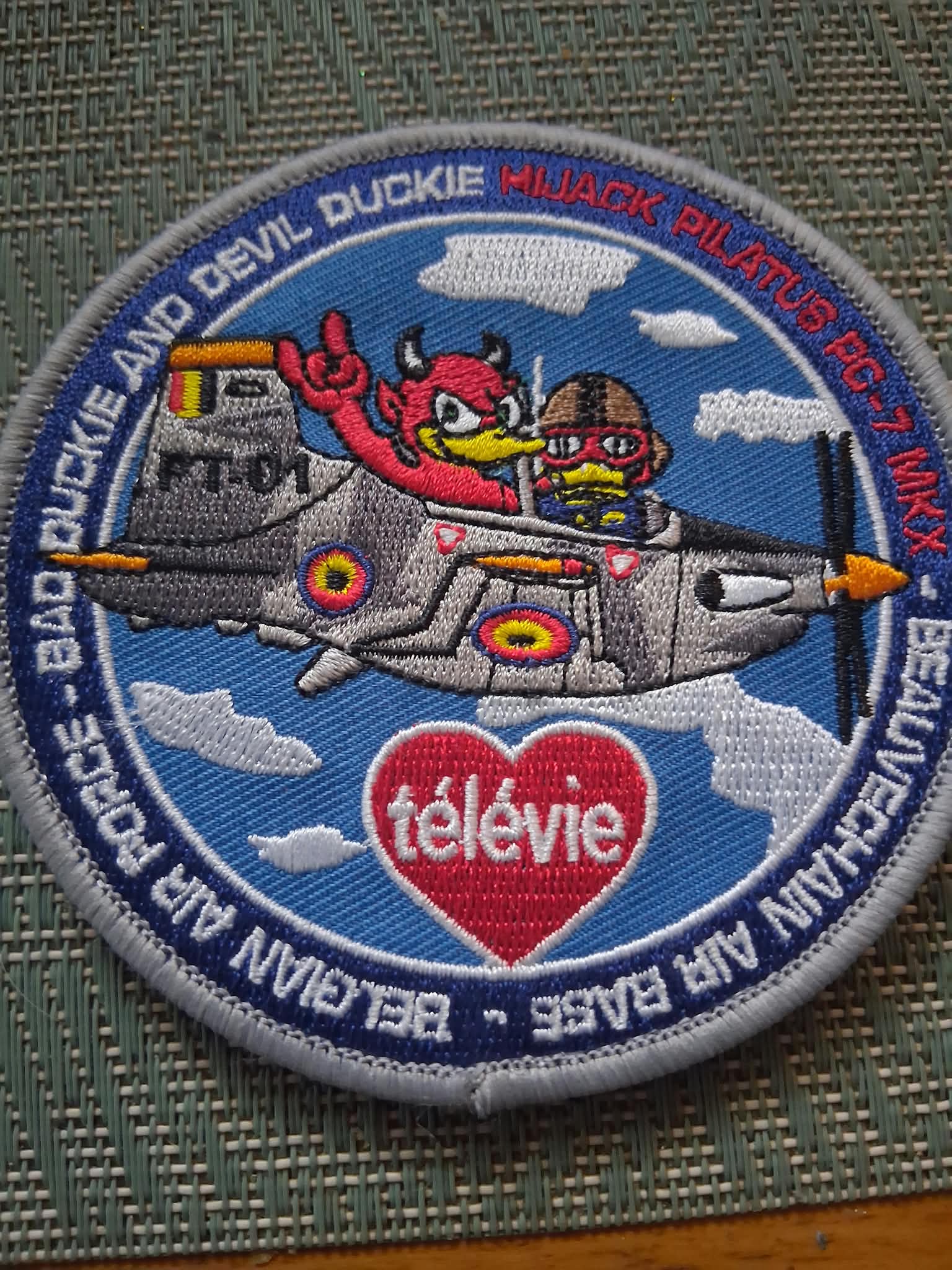
The three patches shown below come from the personal collection of Jurgen Swinnen. The captions describe the pictured items; this is not a museum or official team collection.

Marchetti Static Demo Team patch
Marchetti Static Demo Team — from the personal collection of Jurgen Swinnen.
Red Devils Belgian Air Force patch
Red Devils — from the personal collection of Jurgen Swinnen.
Red Devils Duvel patch
Red Devils and Duvel — from the personal collection of Jurgen Swinnen.

The Red Devils today

A static team with a rich flying tradition

The Red Devils are not currently performing public flying displays. Following the final show at Sanicole in September 2024, flying activities were temporarily suspended in 2025 while the SF.260 trainers awaited replacement and the training of new aircrew took priority.

Today, the team is static. The aircraft, the pilots and technicians of earlier generations, the team traditions and the distinctive badge remain part of the history of the Belgian Air Component. Any future return to flying will depend on decisions concerning a successor to the SF.260 and the needs of the training programme.

Follow the Red Devils on Facebook

Sources and image credits

Historical overview: Belgian Air Force Association, WINGS no. 14 (2018 team), Belgian Wings (Hunter), specialist team histories and public reporting on the April 2025 suspension of flying displays.

WINGS no. 14 (PDF) · Belgian Wings · 2025 suspension report.

The three patch photographs were supplied by Jurgen Swinnen and depict items from his personal collection. The aircraft and team photographs were also supplied for this project; original photographers, dates and publication permissions still need to be confirmed for each image.